Thursday, 25 November 2021

November 2021 'Back on Track'

The meeting at our home base this month was occupied by ensuring the layout was ready to be transported yet again. October's gremlins appeared to be just that. The layout worked well in readiness for its visit to the one-day South Hants MRC exhibition at Portsmouth on Saturday 20 November which was well attended by both exhibitors and the public. There was a definate feeling of relief and sense of enjoyment at being let out, and good layouts too.

 However, despite a faultless setting up on Friday, when it came to show time on Saturday, some sections of the track and some of the points decided to render themselves 'dead'. We struggled on with all too frequent nudges and interventions from above. Never the less there was much aprecation from 'those out front', the visitors.


Alan and Pete enjoy a moment of trouble free shunting.


Apart from Lightermans Yard and Ropley, the 2mm Association was well represented at this show, Jerry Clifford fronted for the Association as well as demonstrating William Smith's Wharf (above) that can be joined to his Tucking Mill layout.

The frst layout confronting exhibition visitors was an intreaguing 4mm hexagonal layout operated from the open centre. Cooper Wort (below) represents the brewing industry in Burton on Trent in the early 1900s.


Back to Lightermans Yard; A view of the transverser and the loco of the month the unpainted 3F by Keith for the S&D layout that he and Alan are working on.


Next meeting 12 December 2021

Thursday, 14 October 2021

October 2021 Meeting

Two things to celebrate this month. As people we are back together, and Lightermans Yard is also back, the two parts returned from their temporary storage with Pete K and Richard, having been caught on the 'road' by the pandemic. Thanks to Alan for transporting one half of the layout across London twice.

Our main aim of this month's meeting was to set the layout up and check that the electrics were functioning. The track also required cleaning and the points tested from the control panel. Two locomotives ran briefly before a fault was indicated. Mysteriously, the panel light continued to be on even when everything was disconnected. Much was discussed but no solution found by the close. This is made a solution urgent for the next meeting as it would be the last opportunity before our due appearance at the Portsmouth show on 20 November. The search for a solution continues. 


Alan showed progress on track work for Evercreech Junction. 

The images are of ECJ boards 3 & 4 showing the up and down main lines with point work for the entrance to the station goods yard, previously shown on the blog. Further point work provides cross overs to the central siding and allows assisting locomotives to come onto the front of north bound trains for the ascent over the Mendips.
The centre siding was also used for temporary storage of local passenger trains on the branch service. Much of the above is well documented in various S&D publications.
As can be seen to the left of the running lines is the UP goods yard. At Evercreech junction all goods trains were scheduled to stop and shunting between the Up and Down goods yards was ongoing twenty four hours a day. The main shunting loco was provided by Temple Coombe shed on a daily basis but other engines were also borrowed for additional shunting moves. The capacity of this yard according to my dodgy calculations is 189 wagons. The lower down yard also holding a similar quantity. So there is still a lot to do in the wagon building program.


Loco of the month is the chasis (below) Alan has kindly built for Richard's 0-4-0 Peckett intended for his shipyard cameo.


Sunday, 19 September 2021

September 2021 Meeting

This month marks the beginning of something, at least that's what we are hoping for the return to face-to-face meetings. Tentative first steps were taken in that a few ventured to our normal meeting hall in Dartford. Partly because of travel distance and other commitments we decided to hold a Zoom meeting as a mid week catchup. 

Alan reported on the 'live meeting';

Just a quick resume of todays meeting. We have probably guessed that the headcount from the 2mm side was going to be low as many of us had prior commitments, However this did give a good opportunity to talk more with the N gauge group.
 
They too were low in numbers but overall it seemed that all were keen to 'get back to normal'.
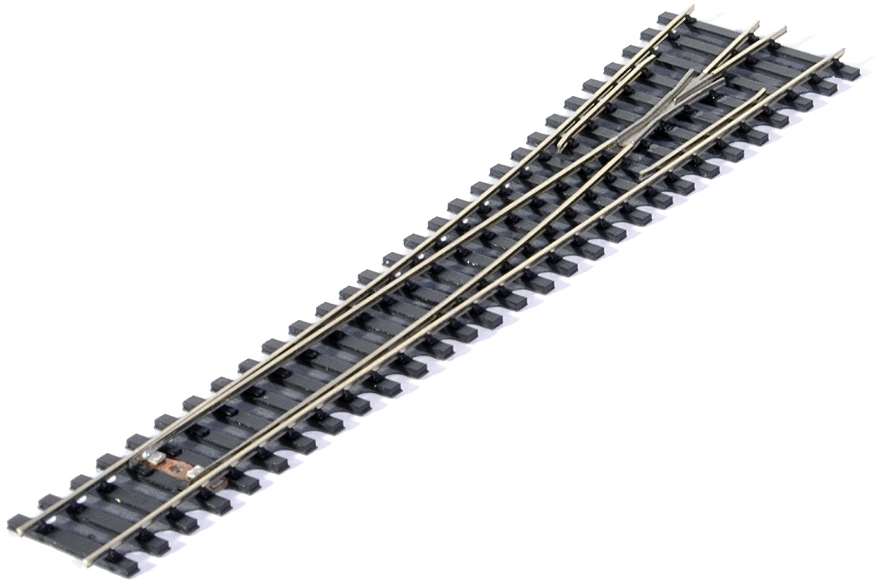
I took along the 3D printed turnout from Finetrax to show how easily a point could be assembled and how good it looked once finished. The N gauge members were impressed too commenting on how much better it looked than the standard N gauge track.

Finetrax B6 Turnout, bullhead code 40
Finetrax B6 Turnout, bullhead code 40, N guage


Various discussions were had and one subject was using Arduino boards to control servos. Apparently these are very easy to set up and very cost effective compared to other options. Although I am a complete numskull when it comes to electronics the system seemed to have a lot to offer.
 
Some of the N gauge group had taken delivery of some new locos the EFE Clayton and the Sonic models 56XX, although none had samples to show it seemed they were well received the 56xx from Sonic being described as first class.
 
We can discuss more detail on Wednesday's zoom meeting. David has offered help with collecting the layout from Richard. But again we can discuss this in more detail before the next meeting.
 
Apart from Alan's report, There was general discussion at Wednesday's Zoom meeting.
 
Richard showed some images from a couple of trips out into the country and one in town.

Bala Lake Railway (Snowdonia). The current 2ft narrow gauge Bala Lake Railway is built on a section of the former standard-gauge GWR Ruabon - Barmouth Junction route. At the core of that route is the railway between Bala and Dolgellau, which was built by the Bala and Dolgelley Railway Company (they used the English spelling for the latter place), and opened in August 1868. A project to construct the extension of the Bala Lake Railway to Bala Town Station is underway.
 
Another encounter with full-size steam at Toddington on the Gloucestershire Warwickshire Steam Railway. Merchant Navy Class, Peninsular and Orient (without it's streamlining).
 
Locomotive of the month has to be the spledid model of Joseph Clement's Fire Fly - 1838 - on to show at Tate Britain in conjunction with William Turner's painting 'Rain, steam and speed - the Great Western Railway' 1844.


Shown here with Turner's 1844 painting of Fire Fly in action.


Friday, 13 August 2021

August 2021 Meeting

This month there was a certain optimism that we could at last see a possible light at the end of the Covid tunnel, maybe a perceived chink of light was enough to spark speculation that we might be able to meet face to face again in a month or two. Our Zoom contact has been very worthwhile spanning over a year and to great extent keeping the spirits up. Reuniting Lightermans Yard both physically (the main parts of the layout are currently located either side of London) and with ourselves, and replacing our 40 minute Zoom sessions, with 4 hours of convivial discussion and running trains, is something worth looking forward to. 

Alan: Apart from the work done for the 2mm Association - major shed work has been taking place with the big hammer!


Howard: Tom wants to use servos for the track he is building for Richard’s cameo. I suggested some HobbyKing servos based on advice from MERG.

  • For semaphore signals, we [MERG] recommend the HobbyKing HKSCM9-5V digital servo. This completely eliminates any tendency to twitch at power up and is completely quiet when the drive pulses cease.

  • For turnouts, we [MERG] recommend the HobbyKing HK15178 analogue servo. Although this can suffer from a power-up twitch, it is ideal where a small amount of pressure is desired to hold the switch blade against its stock rail. Again, it is completely quiet and draws no current when the drive pulses cease.

    There is only a small difference in price between the two HobbyKing servos recommended above, so it makes sense to choose the most appropriate servo for the job.

    Tom intends to control the servos with MERG’s SERVO4 board, and the latest version has eliminated power-on twitching. (HobbyKing are currently out of stock of the HK15178).

    1. Howard also supplied a servo tester to be powered with 6V of AA batteries. He made up a 6way connector for the power supply – this only fits one way so avoids incorrect polarity. The tester is very useful as a standalone test to ensure servos work; it can also set the servo horn to its mid-point to maximise movement in either direction when in use. Where the servos connect to the tester, he marked the edge of the PCB with a black pen to indicate where the brown wire should go (on some servos this lead is black).


      Yet More Experiments with trackwork

      Having watched Laurie Adams’ “2mm Track Talk” Youtube videos, I decided to experiment with his method of feeding power. Laurie used 0.7mm brass wire flattened and soldered in place of the outside Easitrac plastic chairs (2mm magazine p 38 April-May 2017). I had some 0.8mm brass wire but found it impossible to squeeze flat with pliers. Perhaps my wire is hardened; furthermore I do not have a strong grip.

      I found I could get a reasonable effect using single stranded wire of 0.6mm (Rapid Electronics 01-0601) using the ends of a ratchet crimping tool. I was then able to get a good effect on the 0.8mm brass wire using the same technique.


      Molex Crimping tool (Rapid 85-0262)


      flattened wire and brass wire (below)

      A reasonable approximation to a chair can be made if the flattened end is first trimmed.

      Obviously, using them to bond the switch rail to the stock rail still needs the wires to be connected together. I used the brass rod on one and the wire on the other to compare them – the wire is more flexible and I have lots of it! The appearance is acceptable, and would probably be un-noticed after painting and ballasting – I found it hard to get a decent photograph.

      I also used brass sleepers on a piece of copper clad point sleepers.

      I have abandoned my idea of drilling and tapping the Finetrax cast frog to take 14BA bolts, but instead just drilled the hole and pushed some of the wire into it and soldered it to the top of the cast frog. I can use the same idea for the Easitrac cast frogs. I like this method as it is easier than soldering the wire to the underside of the cast frog and having to thread it through the baseboard. My preferred method is to lay the track and then attach the droppers later.

      Richard and Tom: An interesting locomotive from Kato appeared in the press, feels like another diorama  might be forming in the mind - Poplar Docks anyone?


      Progress on 'Clyde'; A companion way for workers' access to the hull, and a way to close the scene.


      Pete TownsendI'm sorry but there is nothing to report from Somerset this month. 

      I have been so busy with the garden that modelling has had to take a backseat.

      I was also a bit dispirited, a while ago I got a nice looking 3d printed Lord Nelson class from Shapeways.  It was advertised  as n gauge, but as it's one of my favourite locos I went ahead. When I got it I checked the overall length of the loco and tender and both were exactly correct for 2mm. Like a fool, I didn't check any other measurements. I went ahead and built a chassis, painted and lined it and was quite pleased with the results. The first time that I ran it on the layout  it fouled the road bridge. Too high.

      I then checked all the measurements.  The tender is spot on.  The loco is right in all dimensions including the footplate height, but somehow the designer has managed to make the body a full 2mm too high. I can only think that this was to take some proprietary mechanism.  It towers above the rest of the stock. A lot of time and effort wasted. Any future 3d printed bodies will be thoroughly checked before building.You have been warned! 

      Next meeting, Sunday 12 September. Location to be announced


Sunday, 25 July 2021

July 2021 Meeting

Amongst the continuing uncertainty and confusion over COVID 'Freedom day', comes the promise of meeting for real in the near future. A welcome piece of news is the prospect that our Church Hall base will be open for a real meeting in September.

Alan expresses our collective hope; "...... I cannot wait to meet up again and share ideas and banter. Let's hope the goal posts are not moved in the meantime."

Howard: continues with more experiments with track work.
I was having problems deciding which was the top of bullhead rail. I showed this picture to Alan Smith, and he pointed out the bottom rail was upside down flatbottom rail. Somehow I had got some flatbottom rail stored with my bullhead rail.


Looking at the differences between the cast frog on Easitrac and Finetrax, Easitrac has drilled and tapped holes for the supplied M1 bolts, whereas Finetrax just has locating pegs in the same position. I have decided to use 14BA bolts instead of M1, as I can use longer bolts which will be easier to screw in, and can be below the baseboard. I like this idea rather than soldering wire to the frog, as the bolt can be screwed in once the point has been laid, so I decided to adapt the Finetrax cast frogs.

I used a Dankroy Optical centre punch to create a starting hole, then drilled with a 0.8mm drill and tapped 14BA.        


Finetrax cast frogs, with 14BA bolt in drilled and tapped peg

I have made 2 Easitrac B6 points intended for my test track. When positioned as a crossover, the “6 foot” gap is nearer 14mm then 12mm. I could remove some sleepers to make them fit but decided that as it was only for a test track it didn’t matter. I don’t know if B8 turnouts would suffer from the same problem.

Tom Cutting: has been moving ahead with the track work for 'Clyde' the shipyard diorama, working on the points and crossover.


 and Richard has been working on the buildings for 'Clyde'  


Also acquired a 3D printed traction engine for the diorama, as yet unpainted.


Pete Townsend: More from Leigham Road - views of the overall layout. The scenic section on the left is 9 ft long, but only 1ft deep.


The curved boards leading to the ten road fiddle yard are 3ft radius. At present the fiddle yard is reached by simple 2 road traversers at each end. This was a relatively quick and cheap solution as I coul not face building all those points. The traversers are built on the standard baseboard frames so can have a flat top and points added if and when I feel inclined. I intend to extend the scenics onto the two front curved boards eventually, but wanted to get things running first. The loco depot  is set at a lower level, but the track leading to it rises to the same level as the other tracks to enter the fiddle yard.

Next meeting Sunday 8 August at 13.00


Friday, 18 June 2021

June 2021 Meeting


Just as we were hoping to come out of COVID lock down and meet up face to face again, we have been put on hold once again for at least a month and possibly longer.

We received a very nice letter from 'Virtual Railex' thanking us for our Lightermans Yard contribution to their virtual show last month and inviting the Yard to the next 'real' show.

So, to report on another Zoom meeting! This session could be labeled 'points' as discussion covered two approaches to turnout construction.

Howard: Playing around with points - Easytrac and Finetrax. I have experimented with curved pegged pointwork, all these examples are using B6 Finetrax points but similar observations apply to Easitrac.
The Geoff Jones method works fine, but means I have less point base between all the sleepers. 


I prefer to keep as much of the point base between the sleepers as possible because I like to paint & ballast the point, then add the rails.

 
I later discovered the Rod McCall method but when I tried this a slit appeared right across the point base. 

For my N/2mm test track I plan on having a crossover for each gauge. Finetrax do a complete crossover. 

To align the plain track and the point base, I had to cut the sleepers on the plain track at the bottom right, otherwise there is a large gap (shown at the top left). It might have been better if the crossover had been extended by about 3 sleepers. I may have to use some PCB point sleepers and solder the track at these positions.

Unlike the Easitrac points, the milled crossover in Finetrax does not have a tapped hole for the dropper. I intend to drill and tap a 14BA hole for this.

I also need to experiment with soldering brass chairs to point sleeper base in order to electrically join the switch rails with the stock rails. I intend to use this instead of filing the point base and adding some copper strip. 

Alan said that both Easitrac and Finetrax are to include the chairs in their point bases replacing slotted chairs so only the rail needs to be added.

Tom Cutting: Showed progress on the point and track work for the Richard's cameo layout 'Clyde', adopting a more traditional way to produce bespoke turnouts and a crossing using Templot templates. 


 The point template. The proposed angle of crossover was discussed.


Alan S: Just one picture of some of what Alan has been up to this month. More jigs (quartering) for the shops.


Pete K: I have just spent a very pleasant long weekend at The Isle Of Wight Steam Railway for their 50th anniversary gala. These guys model at 304.8mm/foot and it’s very impressive. The weekend featured 2 Terriers and an O2 and they ran beautifully.

 
As we all know locos with a 0-4-4 wheel arrangement and Terriers, because of their size, are difficult locos to get running smoothly but they managed it brilliantly. I asked one of the drivers what sort of stay alive unit they used but he was just obsessed with cleanliness and all he kept repeating was “Muck Off!”, at least I think that’s what he said!

Meanwhile the Island’s electric railway was not running at all. The official word was because of engineering work but you only had to look at the track and it was obvious….. it just needed cleaning!


Pete Townsend: Locomotives under construction in Somerset.

In the above photo are 5 locos that I started building before moving West.

I have taken advantage of some spare time and made progress with all of them. They are two E2's one with extended tanks, a C Class that predates the Farish model, 
A Q Class and a Lord Nelson.
 
All except the C Class are 3d printed bodies from Shapeways. The C Class is a N Brass Models kit. 

All are mounted on Farish chassis converted to finescale using the Association replacement bearings.
 
 
Next meeting Zoom? on 11 July