Tuesday, 11 October 2016
Wilmington Exhibition - October 2016
A somewhat exhausting weekend, virtually on home ground.
Assembly of the layout was well in progress when I arrived at about 7.45 on Saturday morning, then slowed somewhat as all the various scenic sub-boards were carefully slotted into place.
By opening time (10 am) everything was up and running, and early testing confirmed no major problems.
Alan Smith's warehouse (latest incarnation) made its first appearance on the layout.
A good overview of the right hand side of the layout - next outing should have the backscene extended to fill the gap.
Another train arriving, adding a few more wagons to keep the shunters occupied.
Shunting in progress.
The design of the layout severely restricts length of trains - loco plus five wagons maximum.
More intensive shunting - both of the Jinties in operation.
Topping up the coaling stage.
Some of the loco roster.
Class 24 diesel and Q from Keith, 4F and Jinty from Alan S.
Eagle-eyed viewers may spot that the top of the water crane is missing - broken in transit and awaiting repair.
A peek behind the scenes - trains formed in the fiddle yard/traverser, waiting their chance to add to the wagons in the yard.
A serious photography session before opening time on Sunday morning.
Unfortunately none of the fruits have yet made their way to the blog...
We were in a separate small hall, away from the main hall and the church, so the crowds of spectators were never overwhelming.
Most were very appreciative of the layout, particularly the front scenery, and we kept a few of the younger viewers busy trying to find all the pigeons.
Sunday, 11 September 2016
September 2016
Next month's exhibition, which is concentrating minds on ensuring that the layout is working reliably.
Extended testing of locomotives, trackwork, and rolling stock revealed a few minor problems, all of which were successfully fixed.
Some stock from Alan S - a converted Minitrix brake van and three not-quite-finished BR box vans.
Also from Alan S, a couple of converted Farish locos, using the Association's "almost drop in" replacement wheel system. Jinty and 4F are not entirely convincing for a south London layout but a quick and simple way to get some locos running.
Keith's train awaiting arrival from the fiddle yard. The class 24 wasn't running as well as it should, the wagons were fine.
Some of the stock being shunted during the testing session.
Coaling stage, incorporating a water crane, from David S.
Work-in-progress - some of my contributions to the wagon collection (carefully photographed with strong rear lighting to hide their flaws). Some non-standard vans, to add variety to the mix.
This month's improbable visitor - an unfinished co-bo by David S from a Worsley Works kit, apparently a friend of Thomas...?
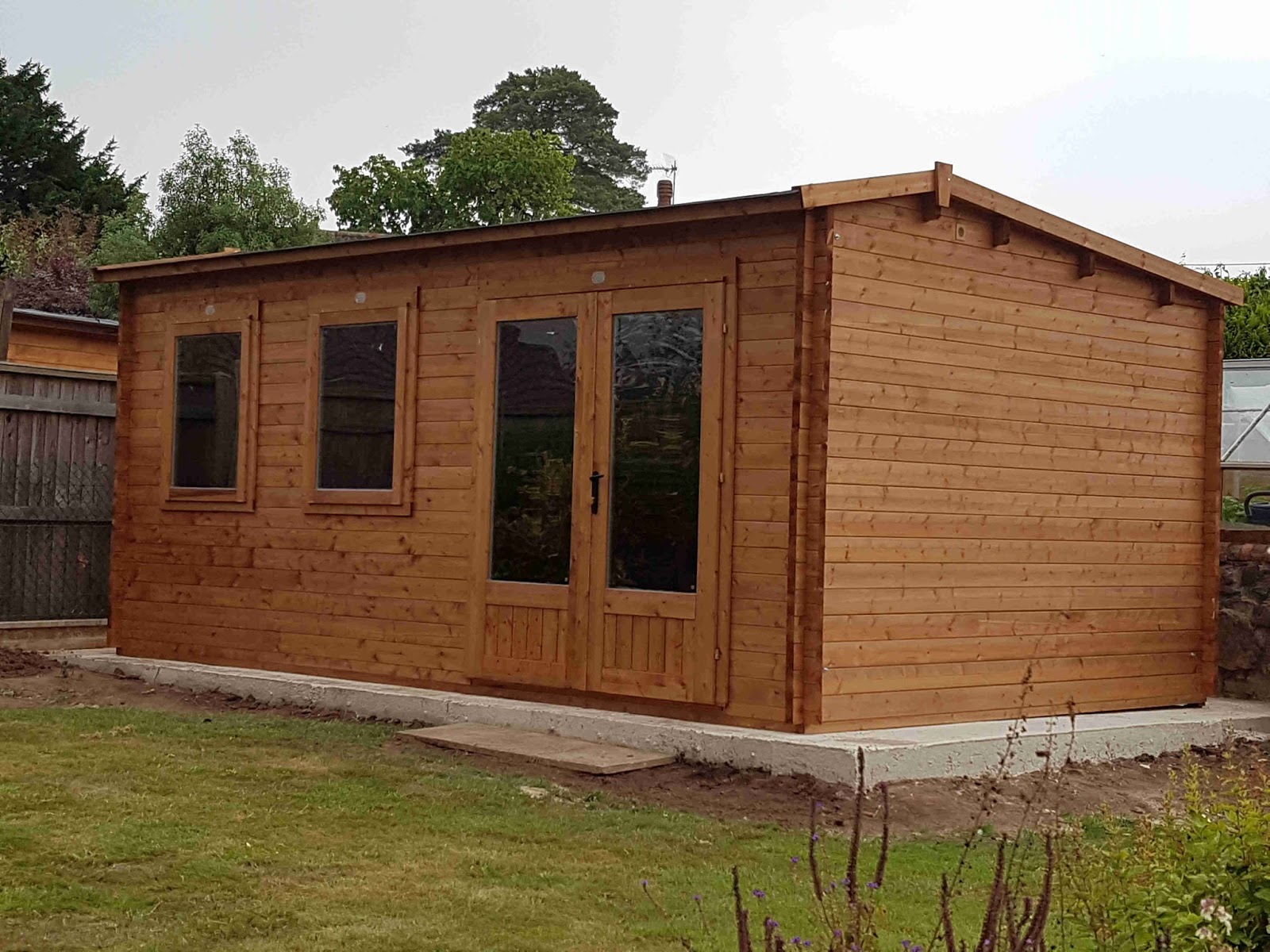
News from the Southwestern branch of the Group - a photo from Pete Townsend, showing his new log cabin (and future railway room).
Monday, 15 August 2016
Wagon workshop - August 2016

The August meeting was planned as a wagon-building workshop. The intention was for members to build some wagons to populate the layout, reducing reliance on the stockboxes of Keith and Alan S - in time for the forthcoming (October) Wilmington Exhibition if possible.
Everybody appeared to be well equipped, with a variety of mobile workbenches and wagon kits to
build.

Keith started with a general introduction, suggesting source books for building techniques and prototype information, drawings and pictures. He then went step-by-step through his suggested method of construction, specifically for a BR standard van, with numerous tips and suggested tools/jigs.
For example
a top hat bearing soldered to an flat brass "handle", for checking the size of the hole in the etch
a pair of forceps with a "notch" for inserting wheelsets in the underframe
use of a wheel-less axle to hold top hat bearings in position whilst soldering
He showed off some of his collection of cast resin wagon bodies, and distributed van bodies to be mounted on the underframes being built. He also recommended the use of self-cast axleboxes, rather than the fold-up etched ones in the kits.
All the would-be builders were far too interested in this talk to make much progress on building their own wagons, but went away full of enthusiasm and good intentions to have something ready for the next meeting.
The layout lay untouched, though Alan S had some progress on the warehouse to demonstrate.
Sunday, 10 July 2016
Chatham Debrief
A rather shorter report this time.
Most of the July meeting was devoted to a debrief of the recent Chatham Exhibition, where Lighterman's Yard (apparently now nicknamed "The Yard", to sidestep the apostrophe controversy) made its first appearance at a major public exhibition. Though that's not strictly accurate - it appeared at Warley some years ago, in a rather unfinished state.
The numerous invitations to other exhibitions suggest that it was a successful debut, and threaten a busy time over the next couple of years.
There were a few issues from points and uncoupling that needed attention - some were fixed during the meeting, others postponed for later.
Various organisational issues were discussed for future shows - transport, manning, funding, and communal toolbox being the main ones.

David Smith brought along this model which had started life as a recent Farish class 47. The body was lowered, the bogies were narrowed, and detailing was added - new handrails, doors and roof fans. Despite heavily weathered wheels it ran well.
A cast body from a master made by David Smith. 3mm scale, so even if it had bogies they probably wouldn't fit on the track.
Checking the track, using the Class 47 and a couple of vehicles from the dairy dock.
Whilst a layout is never complete, the Yard doesn't have much left on the "must do" list - mainly completing the ballasting, building the last warehouse, and training the operators. So "working on the layout" probably won't be such a central feature of future meetings.
A wagon-building workshop is planned for the next couple of meetings (though this has the stated aim of providing extra rolling stock for the layout).
So now is probably a suitable time to repeat the invitation to prospective members to come along and see what goes on here. Volunteer operators will be particularly welcome, but all aspects of 2mm modelling will be discussed.
Most of the July meeting was devoted to a debrief of the recent Chatham Exhibition, where Lighterman's Yard (apparently now nicknamed "The Yard", to sidestep the apostrophe controversy) made its first appearance at a major public exhibition. Though that's not strictly accurate - it appeared at Warley some years ago, in a rather unfinished state.
The numerous invitations to other exhibitions suggest that it was a successful debut, and threaten a busy time over the next couple of years.
There were a few issues from points and uncoupling that needed attention - some were fixed during the meeting, others postponed for later.
Various organisational issues were discussed for future shows - transport, manning, funding, and communal toolbox being the main ones.

David Smith brought along this model which had started life as a recent Farish class 47. The body was lowered, the bogies were narrowed, and detailing was added - new handrails, doors and roof fans. Despite heavily weathered wheels it ran well.
A cast body from a master made by David Smith. 3mm scale, so even if it had bogies they probably wouldn't fit on the track.
Checking the track, using the Class 47 and a couple of vehicles from the dairy dock.
Whilst a layout is never complete, the Yard doesn't have much left on the "must do" list - mainly completing the ballasting, building the last warehouse, and training the operators. So "working on the layout" probably won't be such a central feature of future meetings.
A wagon-building workshop is planned for the next couple of meetings (though this has the stated aim of providing extra rolling stock for the layout).
So now is probably a suitable time to repeat the invitation to prospective members to come along and see what goes on here. Volunteer operators will be particularly welcome, but all aspects of 2mm modelling will be discussed.
Saturday, 25 June 2016
Tutbury
Several members of the group converged on Tutbury Village Hall for the Supermeet, and I include below a few of the photos I took.
Some of the wagons built by the late Steve Sykes, together with prizes that they won at 2FS AGM competitions.
Laurie Adams' layout "Yeovil Town"
The shunting tractor on Yeovil Town, which tested the driving skills of several spectators.
Ian Smith's "Modbury"
Andy Carlson's "South Yard".
An updated/extended version of Mark Fielder's "British Oak" layout, which features in the Beginners Guide. This version, by Richard Caunt, incorporates working hopper systems which deposit coal into the barge (and coal dust into the neighbourhood!).
David Long's "Mayfield Street".
Early stage of a narrow gauge layout by Phil Copleston.
Discussion of the "Minories" layout, which Mick Simpson and Alan Whitehead almost finished over the weekend at Railex.
A view from the other end.
"Colwyn Bay Goods" from Bryn Jones.
Various works-in-progress on Keith Armes' table.
There were at least half a dozen other displays that aren't included in the above photos.
An enjoyable day was had by all, well worth the long trips to get there (which paled into insignificance against Kevin Knight's ...)
Some of the wagons built by the late Steve Sykes, together with prizes that they won at 2FS AGM competitions.
Laurie Adams' layout "Yeovil Town"
The shunting tractor on Yeovil Town, which tested the driving skills of several spectators.
Ian Smith's "Modbury"
Andy Carlson's "South Yard".
An updated/extended version of Mark Fielder's "British Oak" layout, which features in the Beginners Guide. This version, by Richard Caunt, incorporates working hopper systems which deposit coal into the barge (and coal dust into the neighbourhood!).
David Long's "Mayfield Street".
Early stage of a narrow gauge layout by Phil Copleston.
Discussion of the "Minories" layout, which Mick Simpson and Alan Whitehead almost finished over the weekend at Railex.
A view from the other end.
"Colwyn Bay Goods" from Bryn Jones.
Various works-in-progress on Keith Armes' table.
There were at least half a dozen other displays that aren't included in the above photos.
An enjoyable day was had by all, well worth the long trips to get there (which paled into insignificance against Kevin Knight's ...)
Monday, 13 June 2016
Chatham Show 2016
This month's meeting coincided with the two day Chatham Show to which Lightermans Yard was invited, attendance at the show replacing our normal monthly proceedings.
Following the successful set-up by the Friday crew (Alan, Keith, Alan B and Pete K), and leaving the layout in full running order, a mysterious 'short' first thing on Saturday morning found Keith under the layout and eventually replacing the cause, a failed point motor! Also discovered was that the two DCC controllers would not allow each other to operate simultaneously, allowing only a single locomotive to be 'driven' at a time. Mild frustration!
However, our frustrations appeared not to be transferred to the viewing public who were generally unaware of our problems and were very complimentary about Lightermans Yard. Of particular interest for all ages being the level of detail in the buildings and scenics, despite the two new additions, the main warehouse and the low relief buildings at the left end of the layout still being 'work in progress'.
Fortunately for our group, Pete Townsend was able to attend (and share the very positive comments about the buildings), his impending westward move having been delayed.
The Saturday crew; Pete K, Alan S, Keith, Gordon and Richard - Pete Townsend and Alan Brazier were supporting public! David Walley was otherwise engaged operating the Wealden Group's 2mm layout, Llangerisech which was also in the show, although in the other hall and not close enough for us to share the occasion.
The partially finished curved warehouse at the left end of the layout was positioned, it fitted much to Richard's relief. Minus windows, but painted, it now requires a few 'tweeks' and some weathering to complete the scene (left).

On reflection, and with the mock-up of the railway warehouse in place at the other end of the layout, it was generally agreed with Alan S's intention to reduce the overall height of this building.
Operators sharing the running on one controller (right).
On Sunday, with both controllers working, a short piece of rail became detached and required an emergency 'weld' to re-establish contact. Also discovered was the required controller settings for double operating, found by Pete K deep in the manual. We had two trains running for most of the day until a short reduced us to single working again.
Sunday crew; Pete K, Alan S, Keith with Richard and David S joining after the opening.
We were delighted by the number of enquiries from exhibition organisers or their representatives to show at various exhibitions next year or the year after, we could be on the road several times in the coming months!
It took only 45 minutes to disassemble and pack the layout away in its traveling cases, and load them into vehicles for their homeward journey. Very pleasing to all concerned.
Although a little disappointed by the fairly light attendance on both days, this was a successful outing.
As Pete King said on behalf of the group, thanks to Pete T for kicking the old girl into life. The large majority of the nice comments were about his scenery. So thanks again Pete for your legacy.
Sunday, 8 May 2016
Backscene again
Final preparations before next month's appearance at Chatham Exhibition. There was no attempt at running, or even at fault-finding, the meeting concentrated on scenic improvements.
The main item was the latest version of Richard's backscene, which now incorporates appropriate fading towards the back, with the colour becoming progressively more grey and the outline becoming more blurred. Overall it's a grey impression, suitable for a rather smoggy day in London. The wall suspended in mid air in front of the warehouses was trimmed to shape, and taken away with the baseboard to be glued in place.
The backscene now hides the back of the layout, but the left end needs further work. A suitable
curved frame was prepared (at least the initial outline was cut from Pete T's roll of bendy plywood), for final trimming to size and gluing into shape.
Pete T and Richard have been working on the frontage for a warehouse to go in front of the left end of the backscene - Pete T scratchbuilt a single section, then Richard used that as a master to create further sections. That should be the subject of a future blog entry.
A view of the rear of the layout, showing the supports for the backscene (Gordon's work, I believe).

Alan S had tackled the problem suffered by vertically-challenged operators (they can't see over the backscene...). Two duckboards have been cut from thick plywood to go on top of two of the scenery boxes. elevating the operators by almost a foot.
Pete T had completed a bit more scenic work on the dairy - an elaborate staircase from street level, and the basic interior (and open doors) for the dairy premises under the viaduct.
An invitation for next year's Epsom Exhibition (April 2017) had been received, and it was agreed this should be accepted.
Alas this may be Pete T's last attendance at a Group meeting - he is aiming to complete sale of his house and move to Somerset early in June. However, solicitors are dragging their feet, and it's possible he might be around for a meeting or two yet - at least next month at Chatham.
The main item was the latest version of Richard's backscene, which now incorporates appropriate fading towards the back, with the colour becoming progressively more grey and the outline becoming more blurred. Overall it's a grey impression, suitable for a rather smoggy day in London. The wall suspended in mid air in front of the warehouses was trimmed to shape, and taken away with the baseboard to be glued in place.
The backscene now hides the back of the layout, but the left end needs further work. A suitable
curved frame was prepared (at least the initial outline was cut from Pete T's roll of bendy plywood), for final trimming to size and gluing into shape.
Pete T and Richard have been working on the frontage for a warehouse to go in front of the left end of the backscene - Pete T scratchbuilt a single section, then Richard used that as a master to create further sections. That should be the subject of a future blog entry.
A view of the rear of the layout, showing the supports for the backscene (Gordon's work, I believe).

Alan S had tackled the problem suffered by vertically-challenged operators (they can't see over the backscene...). Two duckboards have been cut from thick plywood to go on top of two of the scenery boxes. elevating the operators by almost a foot.
Pete T had completed a bit more scenic work on the dairy - an elaborate staircase from street level, and the basic interior (and open doors) for the dairy premises under the viaduct.
An invitation for next year's Epsom Exhibition (April 2017) had been received, and it was agreed this should be accepted.
Alas this may be Pete T's last attendance at a Group meeting - he is aiming to complete sale of his house and move to Somerset early in June. However, solicitors are dragging their feet, and it's possible he might be around for a meeting or two yet - at least next month at Chatham.
Subscribe to:
Comments (Atom)